Building the fastest website of the world with ReactJS !!!
· Updated · 3 min read · by Adrien Lopez
Static site generation and the Jamstack changed how we build fast and secure websites. From Gatsby in 2019 to Next.js and React Server Components today, here is how this very site is built, and how you can get near-perfect performance with React, a headless CMS and a CDN.
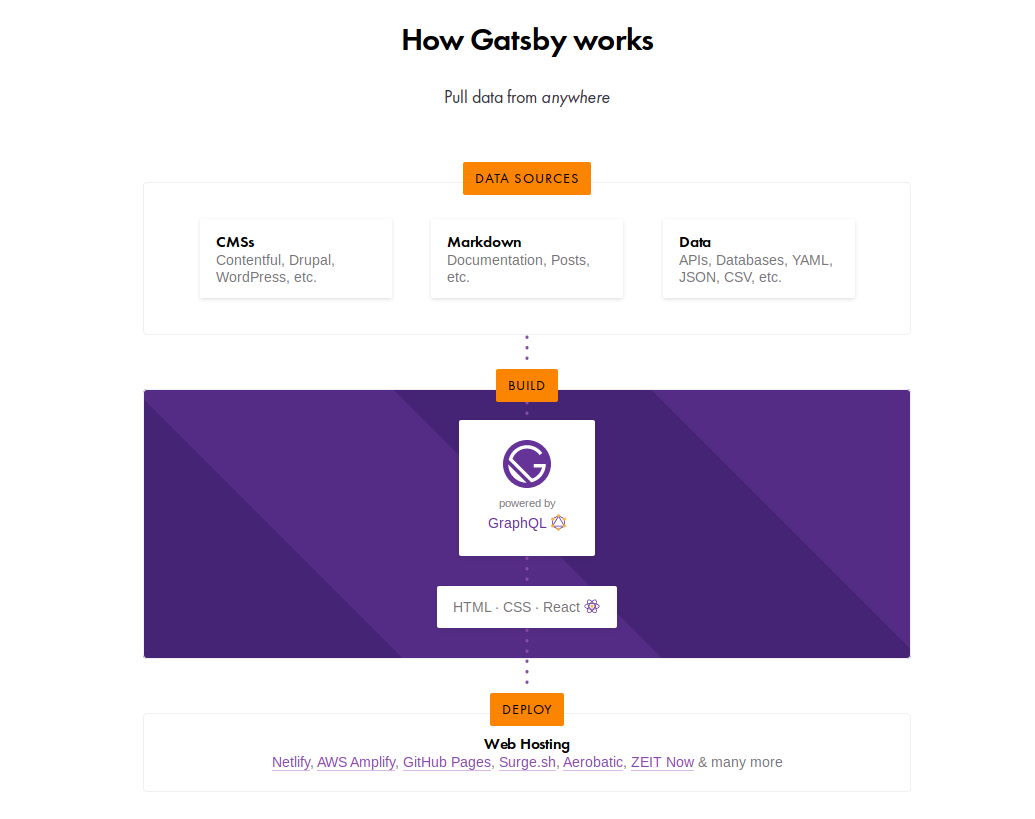
In 2019 I explored a new way to build websites, more secure and much faster: static site generators. Instead of computing each page on a server when a visitor asks for it, you pre-build every page once and push the result to a global network of servers (a CDN), ready to be delivered instantly wherever your users are. This site has been built that way ever since, first with Gatsby, and now with Next.js.
The Jamstack in a nutshell
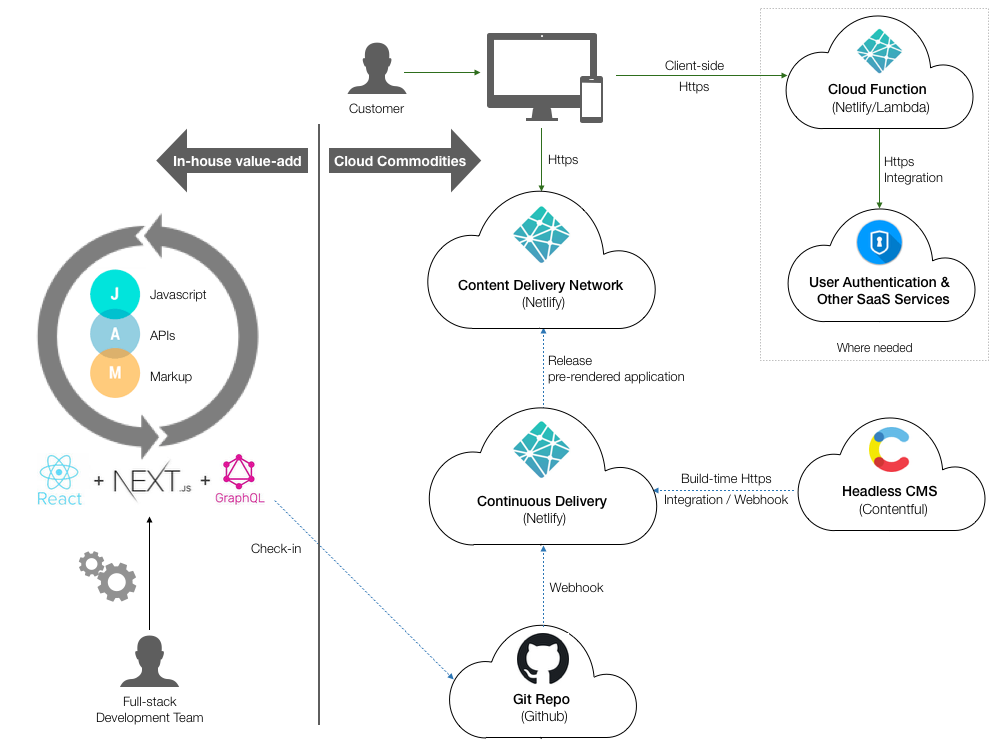
The term Jamstack (JavaScript, APIs, Markup) was popularised by Netlify. The idea:
- Markup is pre-rendered at build time into static HTML files.
- JavaScript adds interactivity in the browser.
- APIs handle dynamic features: forms, search, payments, authentication.
- Git is the single source of truth: every commit triggers a new build and deployment.
Benefits:
- Speed. Static files served from a CDN are as fast as the web can be.
- Security. No database or server-side code exposed to the public: the attack surface is tiny.
- Scalability. A traffic spike costs almost nothing: it's just files.
- Developer experience. Modern tools, previews for every pull request, instant rollbacks.
2019: Gatsby, React and GraphQL
My first version used Gatsby, a React-based framework that pulled content from Markdown files through a GraphQL data layer, optimised images automatically, and produced one of the fastest websites I had ever built, with perfect Lighthouse scores. Combined with Netlify CMS (now Decap CMS), non-developers could write articles in a friendly interface while every change was saved as a Git commit.
Gatsby was a pioneer, but the ecosystem moved on: after Netlify acquired Gatsby in 2023, development slowed down, and many projects, including this one, migrated to Next.js.
2026: Next.js, React Server Components and static export
The current version of AD Ventures runs on Next.js with the App Router and React Server Components:
- Server Components read the Markdown files directly at build time with Node.js: no GraphQL layer, no client-side data fetching, less JavaScript sent to the browser.
- Static export (
output: 'export') generates plain HTML files for every page, article and tag, deployed on Netlify's CDN. - Metadata API generates titles, descriptions, Open Graph images, canonical URLs, a sitemap, a
robots.txtand structured data (JSON-LD) for search engines and AI assistants. - Decap CMS is still used to edit content, served at
/admin/and authenticated with Netlify Identity.
The result: a site that loads in a fraction of a second, costs nothing to host and is easy to maintain.
Tips for a really fast React website
- Render on the server or at build time. Ship HTML, not empty
<div id="root">pages waiting for JavaScript. - Keep client components small. Only interactive parts (menus, forms) need
'use client'. - Optimise images. Use modern formats (WebP/AVIF), explicit dimensions and lazy loading.
- Use a CDN and long cache headers for static assets.
- Measure. Track Core Web Vitals (LCP, INP, CLS) with Lighthouse and real-user data.
- Think SEO from day one: semantic HTML, one
h1per page, clean URLs (ASCII slugs!), sitemap and structured data.
Jamstack, React and AI
AI coding assistants such as Claude, ChatGPT, Mistral and Gemini are now very good at writing React and Next.js code, and frameworks publish documentation designed for them. A well-structured static site is also easier for AI search engines to read and cite: clean HTML, clear headings, a llms.txt file and structured data all help your content be understood by both humans and machines.
Resources
- Next.js documentation
- React documentation
- Jamstack.org
- Decap CMS
- Why you should be using the Jamstack (LogRocket)
- Modern Web Development on the Jamstack (O'Reilly, free ebook by Netlify)
- Sites statiques et Jamstack (in French, Buzut)
Curious about the AI side? Read our overview of Claude, ChatGPT, Mistral AI and Gemini.